Sub-Zero repair Leaf 01 of 06
Refrigerators
Sub-Zero refrigerator repair, read by cabinet style
A classic built-in, a lone column and a refrigerator dressed in cabinet panels wear the same badge, yet each one tires in its own spots. Here the trouble is sorted by body type, then by shoreline versus valley air, and finally by how a single $89 house call turns a vague symptom into a named, priced fix.
4.8/5 from 187 client reviews How the rating is counted
- Book a visit
- (310) 742-8625
- $89 per visit · out 8–6 daily · phone 24/7
Three cabinet styles, three sets of weak points
Start by naming the body. Fans, coils, hinges and door weight sit in different places on each of the three, and that geography decides where a technician's flashlight goes first.
TableSub-Zero body type against the spots where trouble tends to surface
| Body type | Layout in brief | Usual weak spots | First clue owners report |
|---|---|---|---|
| Classic built-in, side-by-side or over-and-under | Fresh-food and freezer share one cabinet; the machinery lives behind the grille up top | Coil furred with lint or brine film, a sluggish condenser fan, door seals squashed flat at the corners | Both halves creep warmer together while the upper grille radiates heat |
| Column, one temperature per tower | A tall single-duty tower, frequently paired with a twin beside it | The long door and its hinge, full-height gasket contact, a single evaporator fan carrying all the load | One tower sulks while its partner behaves, or the door needs a nudge to latch |
| Integrated, panel-ready (Designer) | The cabinet vanishes behind wood or lacquer fronts hung on the doors | Hinges and closers bearing heavy fronts, a seal pulled off the frame, intake air starved near the floor | A hairline gap along one edge, rime on the freezer walls, puddles inside the crisper |
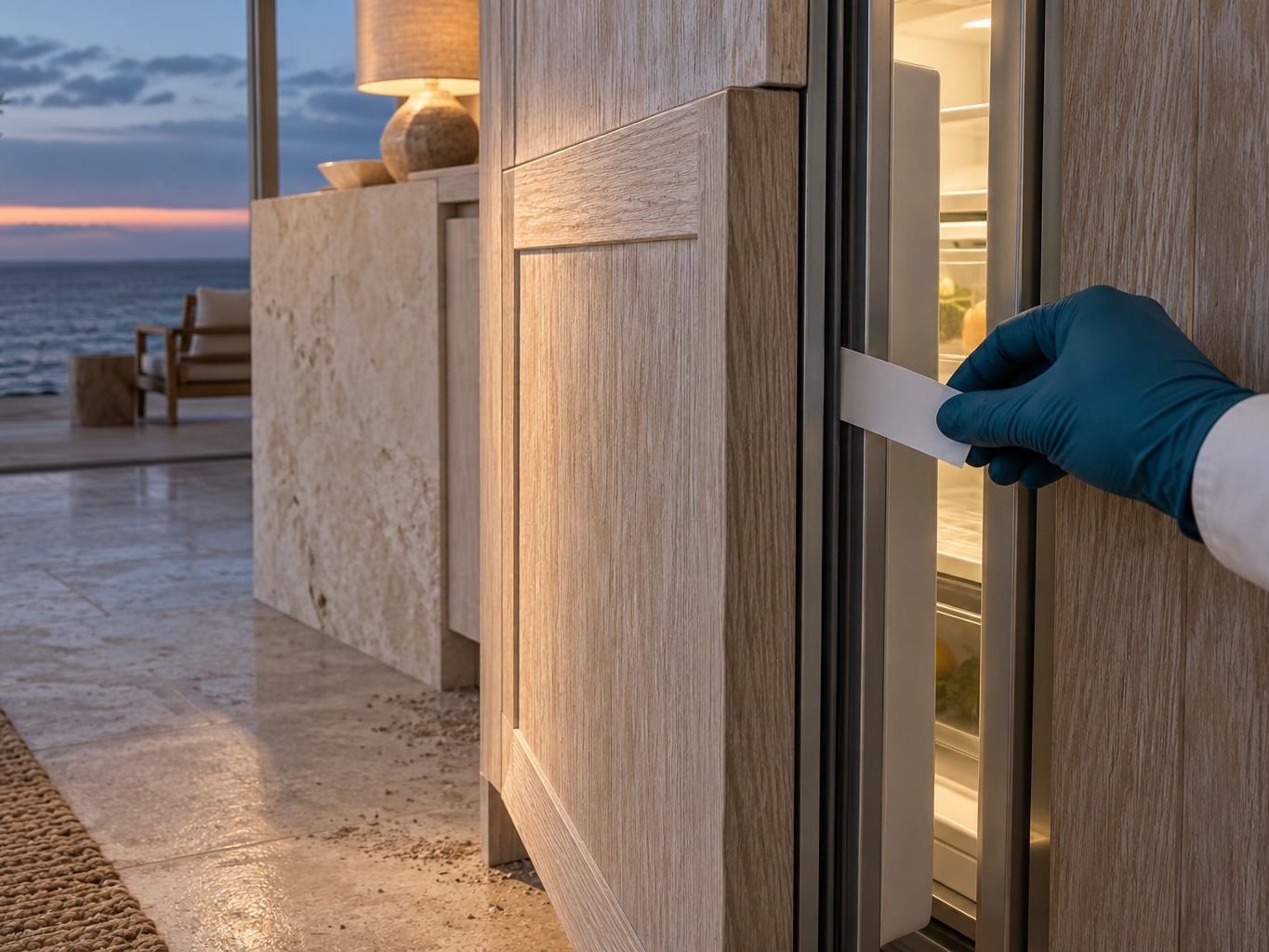
Who repairs built-in Sub-Zero refrigerators near me?
Malibu Sub-Zero Service works on built-in, column and panel-ready Sub-Zero refrigerators across eleven places, from Broad Beach and Point Dume to Brentwood, plus Calabasas, Agoura Hills and Westlake Village over the ridge. Phones are staffed 24/7. A house call costs $89, later knocked off the invoice for the fix.
When the fresh-food side stops holding cold
Nearly every call opens with one of the observations below. Read the right-hand column as a hunch worth chasing, never a final ruling.
- Milk sours early although the display shows your chosen setting
- The sensor sits in one pocket of air while circulation has stalled somewhere else, often a lagging evaporator fan or a vent hidden behind groceries Read the note
- Warmth builds by mid-afternoon, then fades after dark
- A coil unable to shed warmth after the kitchen heats up, typically blanketed in lint or a briny crust
- The fresh-food side seesaws from chilly to tepid
- A wandering sensor, a confused control, or a door that seals on some closes and not on others Read the note
- A puddle grows beneath the crispers or creeps out across the floor
- Defrost water backing up behind a plugged drain, a split drain tube, or now and then the water line feeding the unit from behind Read the note
- A code appears or the service indicator blinks
- The control has stored a fault; jot down exactly what it says before touching the power Read the note
- Click, hush, click again from up behind the top grille
- A compressor straining to kick on, then quitting, which calls for an electrical test rather than another round of resets
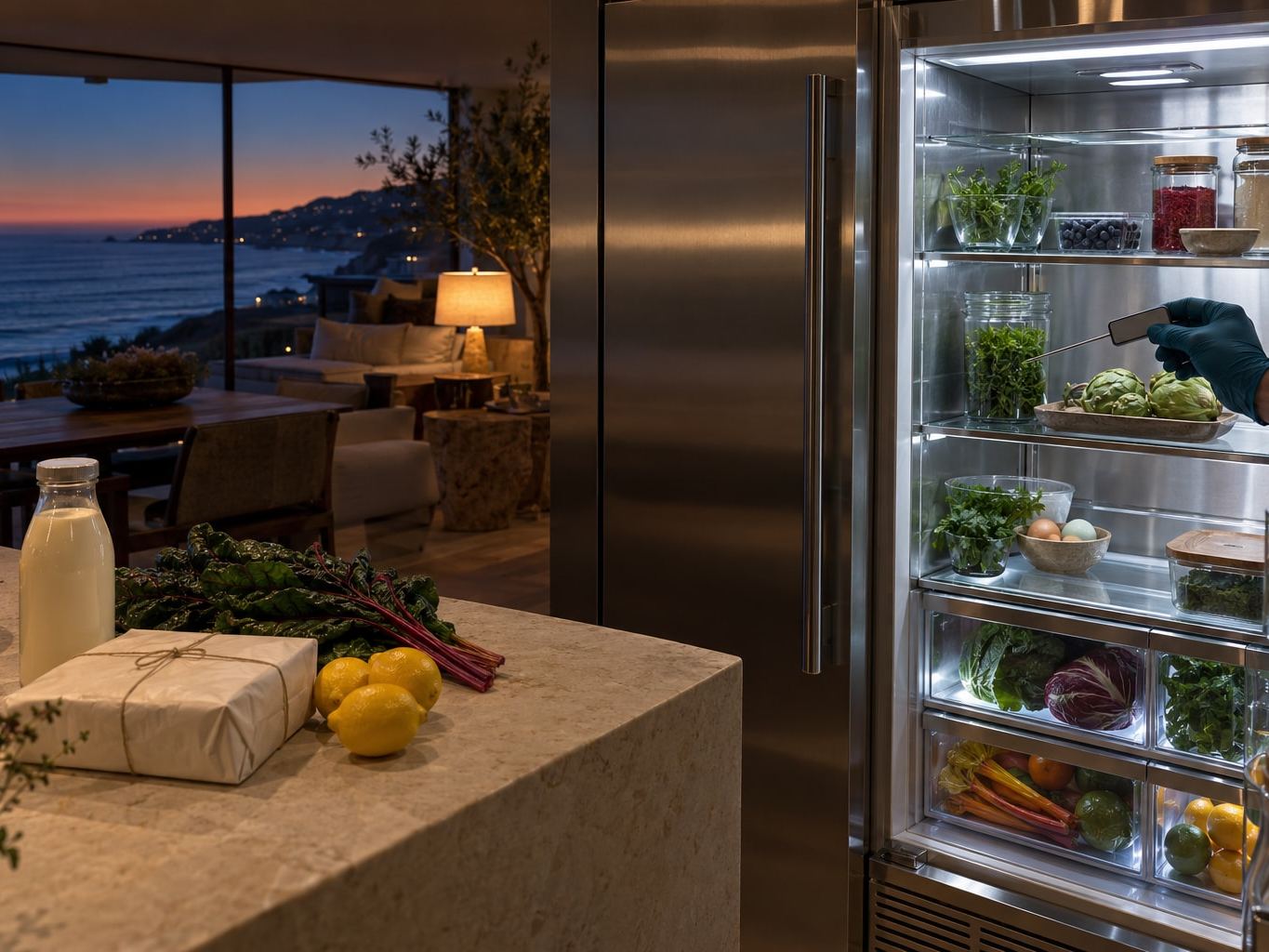
Why is my Sub-Zero refrigerator not cooling?
Most cases trace back to four culprits: a condenser coil smothered in dust or sea-salt film, a fan turning lazily or not at all, a gasket admitting room air, or a sensor or control giving wrong readings. Clear the grille, confirm every door shuts snugly, and if it still runs warm, schedule a diagnosis while the food is safe.
Shoreline house or valley house: why the same model fails differently
Our map stretches from houses whose decks hang over the sand to inland streets that bake on summer afternoons. Same refrigerator, very different air pulled across its coil.
Within sight of the surf
- Moist, salty air glues a tacky residue onto the coil, and that residue grabs dust far faster than plain household fluff
- Screws, terminals and fan brackets near the grille can freckle with rust sooner than they would inland
- Morning marine layer plus open sliders pushes kitchen humidity up, so a tired gasket betrays itself through sweating and rime
- Storm-season blackouts along the coast can leave the control wanting a careful restart
Past the mountains
- Scorching afternoons keep the compressor grinding with hardly a pause
- Powdery dry-season dust coats the coil and the fan blades
- Broad west-facing glass heats the cabinetry around the unit and the air near its grille
- Santa Ana gusts and the outages they bring can mean a restart after a long, dark stretch
ReadingBy the beach the flashlight lingers on rust, gaskets and a crusted coil; inland it lingers on heat load, airflow and compressor strain. Readings settle the question, never the zip code.
How the visit runs, start to finish
No clock appears below, since duration hinges on what the meters show. The sequence, though, stays fixed on every call.
-
Hear the story
What changed, roughly when, and what the panel has displayed. A phone snapshot of the model plate, normally mounted within the fresh-food compartment, speeds things up when you ring.
-
Survey the cabinet
Door alignment, seal contact on all four sides, the grille and coil, the drain path and the floor beneath. Panel-ready units get an extra look at hinge strain and closer tension.
-
Take readings
Temperatures at several heights in each compartment, fan speed and noise, how the compressor starts and runs, plus electrical tests that tell a dead part from a loose connection.
-
State the fault and the figure
You learn what broke, what we suggest and the precise cost of the fix while every new part is still sealed in its packaging. Say no, and you owe only the $89 call.
-
Fix, then prove it
Once you nod, the work proceeds and the cabinet is retested under real load. When something has to be ordered, you are told on the spot and we pick a return date together.
What moves the repair price
Our single fixed number is the $89 house call: one charge per trip, even if three or four Sub-Zero machines get opened up that afternoon. Repair quotes follow the diagnosis and are shaped by the items below; the pricing page goes further.
-
The failed component
Swapping a fan or a thermistor, clearing a drain and correcting a refrigerant fault are worlds apart in labor and materials.
-
Inside or outside the sealed loop
Opening the refrigerant circuit demands extra hours and dedicated equipment compared with replacing a part mounted outside it.
-
Body type
Panel-ready units may need their fronts propped or lifted off; twin towers sometimes require sliding one forward to reach its back.
-
Stock or special order
Back-ordered pieces add a second trip, which you learn about before agreeing to anything.
-
What the sea air left behind
Rusted fasteners and brackets can stretch a job that would go quickly on a cleaner machine.
How long does a Sub-Zero refrigerator repair take?
That hinges on the cause and on whether the replacement part is available. Coil cleaning or a fan swap frequently wraps up on the first trip, while sealed-system work or a back-ordered component means coming back. Expect the plan, including any return trip, to be spelled out while diagnosing, ahead of the repair itself.
Eleven local refrigerator pages
Every local page weighs what its own patch of coastline or valley does to a built-in refrigerator, from brine-heavy beach air to dry inland summers.
-
Neighborhood job
Houses strung along the highway and tucked into canyons, where ocean damp collides with dry heat.
-
Neighborhood job
Homes perched on the sand itself, salt arriving with every onshore breeze.
-
Neighborhood job
A wind-scoured headland where fog keeps the air heavy.
-
Neighborhood job
A packed line of oceanfront houses with scarce parking beside the highway.
-
Neighborhood job
Switchback roads, oak canopy and mist pooling between ridges.
-
Neighborhood job
Clifftop streets catching both marine air and inland warmth.
-
Neighborhood job
Close-set blocks near the pier and kitchens that never seem to rest.
-
Neighborhood job
Tree-lined streets and big kitchens set back from the shore.
-
Neighborhood job
Sun-baked hills that make a refrigerator labor all summer.
-
Neighborhood job
Inland heat and drifting dust settling onto the coil.
-
Neighborhood job
Calm streets around the lake, well beyond the mountains.
What refrigerator owners ask on the phone
- Should I fix my old Sub-Zero fridge or just buy a new one?
- The diagnosis normally answers that. Sub-Zero designs its built-ins to be serviced, and plenty of faults, fans, sensors, seals, drains, are routine component work. When the trouble lies inside the sealed system, we lay out the cost and the scope so you can compare it honestly with tearing out a unit fitted into custom cabinetry.
- Can you fix a panel-ready Sub-Zero without damaging my cabinet panels?
- Protecting the fronts comes first. Plenty of jobs are handled with every front left hanging; if one must be braced or lifted off, we say so first and treat it like furniture.
- Why would the fridge side be warm while the Sub-Zero freezer stays frozen?
- Because most Sub-Zero built-ins cool each compartment with its own evaporator and fan, a fault on the fresh-food side can leave the freezer perfectly cold. That actually narrows the search to one side of the unit.
- How do I keep groceries safe until the repair visit?
- Open the doors only when you must, shift dairy, meat and leftovers into an iced cooler, and use a food thermometer if one is handy. A packed refrigerator left shut stays chilled noticeably longer than one being opened every few minutes.
- If you look at several Sub-Zero units in one trip, do I pay $89 for each?
- No. A trip is billed once at $89, whether we examine a single refrigerator or the freezer tower, wine unit and ice machine too, and that money counts toward whatever repair you approve.
- Can I just reset the refrigerator myself?
- Cutting power briefly can unstick a frozen control, yet when the same symptom keeps returning, each reset buries the real cause and strains the compressor. Note the code shown on the panel and phone us rather than cycling the power again.
Calls taken 24/7
Refrigerator running warm right now?
Ring (310) 742-8625 at any hour or reserve a slot online; field hours are daily from 8 AM till 6 PM. Your $89 trip charge melts into the repair total once work is approved. Access notes and directions belong on the contact page.
$89 covers the trip, not each appliance; it is then knocked off the invoice when you green-light the repair.